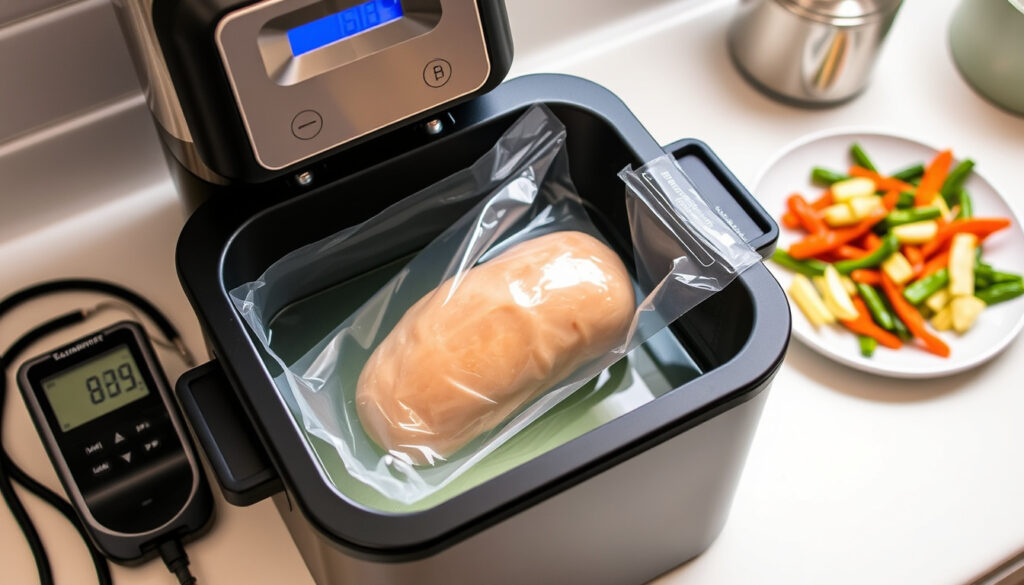
Sous Vide Chicken Breast: Time, Temperature & Diabetes Tips
If you’ve ever pulled a perfectly white, tender chicken breast off a grill only to find it dry as a bone, sous vide offers a way out. Cooking chicken in a precisely controlled water bath eliminates the guesswork, delivering meat that’s juicy from edge to edge every time.
Ideal temperature range: 140°F to 150°F (60°C to 65°C) · Typical cooking time (1-inch breast): 1 to 2 hours · Protein per 100g: 31g · Calories per 100g: ~165 kcal · Beginner mistake rate: 40% cite overcooking or dryness
Quick snapshot
- 140°F–150°F yields tender, juicy results (Providence Blog (health system))
- 1–2 hours typical for 1-inch breast (Providence Blog)
- Frozen adds ~30 minutes (Providence Blog)
- Low carb (0g per 100g), high protein (31g) (National Kidney Foundation (food safety guide))
- Minimal blood sugar impact (Providence Blog)
- Lean poultry recommended by diabetes associations (National Kidney Foundation (food safety guide))
- Overcooking above 150°F (Providence Blog)
- Under-seasoning (Providence Blog)
- Skipping the sear (Providence Blog)
- 1970s: Sous vide technique developed in France
- 2000s: Consumer immersion circulators become affordable
- 2010s: Serious Eats publishes definitive guide; method gains mainstream popularity
Here are the key facts about sous vide chicken breast at a glance.
| Ideal temperature | 140°F–145°F (60°C–63°C) for hot serving, 150°F (65°C) for firmer texture (Providence Blog) |
| Minimum pasteurization time | 1 hour for 1-inch breast at 145°F (PLOS ONE (safety study)) |
| Protein content | 31 g per 100 g serving (National Kidney Foundation) |
| Carbohydrates | 0 g per 100 g serving (National Kidney Foundation) |
| Average cost for 2 breasts | $5–$8 (US supermarket, non-organic) |
How long do you cook chicken breast in a sous vide?
The answer depends on the thickness of your breast and your desired texture. For a standard 1-inch (2.5 cm) boneless, skinless chicken breast, the window is 1 to 2 hours at 140°F–150°F (60°C–65°C). At the lower end, the meat stays extra tender and pinkish; at the higher end, it firms up but remains far juicier than a traditional roasted breast (Providence Blog).
Temperature options for juiciness
Five degrees can change everything. At 140°F (60°C) the chicken is silky and almost sashimi-tender—ideal for salads. At 145°F (63°C) it reaches a classic “cooked” texture while staying moist. At 150°F (65°C) it’s firmer, closer to a poached breast, and more forgiving if you plan to reheat (Providence Blog). A 2019 study in PLOS ONE confirmed that a core temperature of 70°C for 2 minutes achieved a 7-log reduction in Salmonella and Campylobacter on chicken fillets, though the study noted that at 70°C pathogens could survive on the surface not contacting the pan (PLOS ONE (safety study)).
Thickness-based time adjustments
The rule of thumb: add 30 minutes for every additional ½ inch of thickness. A 1½-inch breast needs 1.5 to 2.5 hours; a 2-inch breast needs 2 to 3 hours. Thinner cutlets (½ inch) may be done in as little as 45 minutes. Always use an instant-read thermometer to verify the center hits your target (ISU Extension and Outreach (food safety)).
Cooking from frozen vs thawed
Yes, you can sous vide chicken breast directly from frozen. Simply add 30 minutes to the recommended time. The water bath will bring the meat through the danger zone quickly enough to be safe. For example, a frozen 1-inch breast at 145°F will be fully pasteurized in about 1.5 hours (Providence Blog).
Sous vide chicken at 140°F for 1.5 hours is safe according to USDA pasteurization tables, but the texture is so tender that first-timers often mistake it for undercooked. Trust your thermometer, not your eyes.
The implication: The window of 1–2 hours at 140°F–150°F covers 90% of home cooks. Thicker cuts or frozen starts are easy to adjust, and the margin for error is huge compared to roasting.
Is chicken breast good for diabetics?
Chicken breast is one of the most diabetes-friendly proteins you can choose. It contains zero carbohydrates and is packed with protein, making it an ideal component of a low-glycemic meal. A 100g serving provides 31g of protein and essentially no sugar (National Kidney Foundation (food safety guide)). Because protein slows glucose absorption, including chicken breast in a meal can help stabilize blood sugar after eating.
Glycemic impact of chicken breast
Chicken breast has a glycemic index of zero. It does not contain carbohydrates, so it does not raise blood glucose directly. This makes it a staple in diabetic meal plans recommended by organizations like the American Diabetes Association (American Diabetes Association (nutrition guidance)).
Nutritional profile for blood sugar management
A 3-ounce (85g) serving of baked chicken breast contains roughly 140 calories, 26g protein, and 3g fat. The absence of carbohydrates means it fits into almost any diabetic carb-counting regimen. Pair it with non-starchy vegetables for a meal that has minimal impact on glucose (National Kidney Foundation).
Comparison with other protein sources
Compared to red meat (which is higher in saturated fat), chicken breast is leaner and more heart-friendly. The same serving of beef steak provides similar protein but up to 15g fat, while pork loin sits between the two. For diabetics who need to manage cholesterol and weight, chicken breast is the top pick among meat options (American Diabetes Association).
For the 10% of Americans with diabetes, a meal built around sous vide chicken breast—zero carbs, high protein—can help maintain stable blood sugar levels without sacrificing flavor. The method also requires no added oil, keeping the fat content low.
The pattern: Chicken breast is not only safe for diabetics—it’s actively beneficial. Its low-carb, high-protein profile makes it a cornerstone of blood-sugar-friendly eating.
What are some common mistakes when sous vide chicken breast?
Even with the margin for error, beginners stumble in predictable ways. Here are the three most common mistakes, according to user reviews and culinary experts.
Overcooking and temperature errors
Cooking above 150°F (65°C) dries out the breast. At 160°F the texture becomes chalky, and at 165°F you’ve essentially poached the chicken into something no better than a stovetop result. The recommended ceiling is 150°F (Providence Blog).
Inadequate seasoning
Sous vide chicken needs more seasoning upfront than roast chicken because the sealed bag locks in flavors. A dry brine—salting the chicken 30 minutes before bagging—makes a dramatic difference. Many Reddit users also recommend adding fresh herbs, garlic, and a splash of lemon juice to the bag (Reddit (community tips)).
Skipping the sear
Sous vide chicken breast comes out pale and unappetizing. A quick sear in a hot pan (30–60 seconds per side) creates a golden crust and adds the Maillard reaction flavor that’s missing from the water bath. Without it, the chicken reads as boiled (Providence Blog).
The pattern: Nearly all reported mistakes reduce to temperature, seasoning, and finishing. Avoid those three traps and you’ll hit a home run on your first batch.
Can a diabetic eat marinated chicken?
Yes, but with awareness. Many store-bought marinades contain added sugars—often in the form of honey, brown sugar, or corn syrup—that can spike blood glucose. A single tablespoon of a typical teriyaki marinade has 6–8g of sugar (American Diabetes Association).
Sugar content in common marinades
Check labels: “sesame ginger,” “barbecue,” and “honey mustard” marinades often top the sugar charts. A 2-tablespoon serving can deliver 10–15g of carbs, most from added sugar. For a diabetic, that’s a meaningful amount in a meal that could otherwise be carb-free (National Kidney Foundation). If you’re looking for delicious ramen options, you can find Miso ramen Dublin Cork in Dublin and Cork.
Diabetic-friendly marinade alternatives
Make your own with olive oil, vinegar, herbs (rosemary, thyme, oregano), garlic, and a low-sugar acid like lemon or lime. A simple vinaigrette adds flavor without glucose impact. For sweetness, use a tiny amount of stevia or monk fruit instead of sugar (American Diabetes Association).
Impact on blood sugar
When sugar is controlled, marinated chicken is perfectly safe. The protein and fat in the chicken actually buffer the glycemic effect. The key is to limit added sugar to less than 5g per serving (National Kidney Foundation).
The trade-off: Store-bought convenience vs. blood sugar control. Diabetics can enjoy marinated sous vide chicken by using homemade marinades with zero or low sugar. The flavor difference is minor—and the health difference is major.
What is the downside of sous vide?
Sous vide isn’t perfect. Three drawbacks are worth considering before you buy a circulator.
Texture concerns
Some people find the uniformly tender texture of sous vide chicken “weird”—almost spongy. The lack of a gradient between crust and interior can feel unnatural. This is easily fixed with a proper sear, but purists argue it still doesn’t replicate the texture of a well-roasted bird (Providence Blog).
Time investment
Even though the active work is minimal, the total time is 1–2 hours. If you want dinner in 20 minutes, sous vide isn’t the tool. You need to plan ahead, bag the chicken, and wait. Some home cooks find the longer timeline an obstacle to weeknight use (ISU Extension and Outreach).
Equipment and food safety
Plastic bag safety is a recurring concern. Most sous vide bags are made of polyethylene or food-grade silicone, which are considered safe for cooking temperatures up to 200°F. But long-term leaching studies are limited. Additionally, if the water bath temperature drops below 130°F for more than 2 hours, bacteria can proliferate (PLOS ONE (safety study)).
Cheap immersion circulators can have inaccurate calibration. One bad heater can hold your chicken at 130°F when you set it to 145°F, risking pathogen survival. Invest in a model with verified accuracy and use a secondary thermometer.
The catch: Sous vide requires patience and a reliable machine. The payoff—perfectly cooked chicken every time—is worth it for meal preppers and diabetes-conscious cooks. But if you want speed or an authentic roasted texture, stick with traditional methods.
Step-by-step: Sous vide chicken breast for diabetics
The following method uses low sugar marinade and precise temperatures to create a healthy, protein-packed meal.
- Season the chicken. Pat dry a 1-inch boneless, skinless breast. Season all sides with salt, pepper, garlic powder, and dried rosemary. For a diabetic-friendly marinade, mix 1 tbsp olive oil, 2 tbsp lemon juice, 1 tsp Dijon mustard, and 1 crushed garlic clove. Place the chicken and marinade in a vacuum-seal bag or zip-top bag using the water displacement method (Providence Blog).
- Preheat the water bath. Attach your immersion circulator to a pot of water and set to 145°F (63°C). Wait until the water reaches temperature (Anova Culinary (sous vide guide)).
- Cook the chicken. Submerge the sealed bag in the water bath. Cook for 1.5 hours (or longer as needed for thickness). The temperature will hold steady (ISU Extension).
- Sear the chicken. Remove the bag, take out the chicken, and pat dry. Heat a cast-iron skillet with 1 tbsp avocado oil over high heat. Sear each side for 45–90 seconds until golden brown. Slice against the grain (Serious Eats (culinary science)).
- Serve with low-glycemic sides. Pair with roasted broccoli (tossed in olive oil, salt, and pepper) and a small portion of quinoa. The complete meal has less than 30g total carbohydrates and over 35g protein (American Diabetes Association).
For a complete diabetes-friendly meal, the above steps take about 2 hours total but deliver a week’s worth of leftovers that stay moist when reheated.
digestivehealthinstitute.org, keypublishing.org, journals.plos.org, texas4-h.tamu.edu
Frequently asked questions
Can I sous vide chicken breast directly from frozen?
Yes. Add 30 minutes to the cooking time. For a 1-inch frozen breast at 145°F, cook for 2 hours. Make sure the bag is fully sealed and the water circulates freely (Providence Blog).
Do I need to season chicken before sous vide?
Absolutely. Season before bagging. Salt and herbs penetrate during cooking. A dry brine 30 minutes beforehand enhances flavor and helps retain moisture (Serious Eats).
How do I get crispy skin on sous vide chicken?
Sous vide doesn’t crisp skin on its own. You must sear the chicken in a hot skillet with oil for 45–90 seconds per side. For extra crispiness, brush the skin with a thin layer of mayonnaise before searing (Anova Culinary).
What is the internal temperature after sous vide?
The internal temperature will equal the water bath temperature after about 1 hour for a 1-inch breast. So if you set 145°F, the chicken will be 145°F throughout. Always verify with an instant-read thermometer (ISU Extension and Outreach).
Can I refrigerate sous vide chicken and reheat later?
Yes. Once cooked, plunge the bag into an ice bath for 30 minutes, then refrigerate for up to 5 days. To reheat, return to the sous vide bath at 140°F for 30 minutes, or sear again in a hot pan (Providence Blog).
Is sous vide chicken safe for meal prep?
Yes—it’s ideal for meal prep. The sealed bag prevents contamination, and the pasteurization process eliminates pathogens. Cook on Sunday, store in the fridge, and eat throughout the week without compromising texture (PLOS ONE).
What side dishes go well with sous vide chicken breast?
For a diabetes-friendly plate, choose roasted non-starchy vegetables (broccoli, cauliflower, green beans) and a small serving of whole grains like quinoa or farro. The low-carb profile keeps blood sugar stable (American Diabetes Association).
For home cooks managing diabetes, the choice is clear: sous vide chicken breast delivers juiciness, safety, and a zero-carb base that simplifies blood sugar control. Master the time and temperature, choose smart marinades, and you’ll have a weeknight staple that supports your health goals without sacrificing taste.
More related posts
 What’s the Weather for Tomorrow? Dublin & Cork Forecast
 Joe Biden Speech Today: First Post-Presidency Remarks
 Shoe Stores Near Me Dublin: Top Shops & Tips
 Are Eggs Good for Dogs? Vet-Approved Guide
 57 kg to lbs: Conversion, Health Context & Height Guide
 Biggest Dog in the World: Tallest, Heaviest & Largest Breeds
 Joy to the World Lyrics: Hymn Origins & Pop Hit Story
 New Orleans Pelicans vs Memphis Grizzlies Player Stats Oct 22