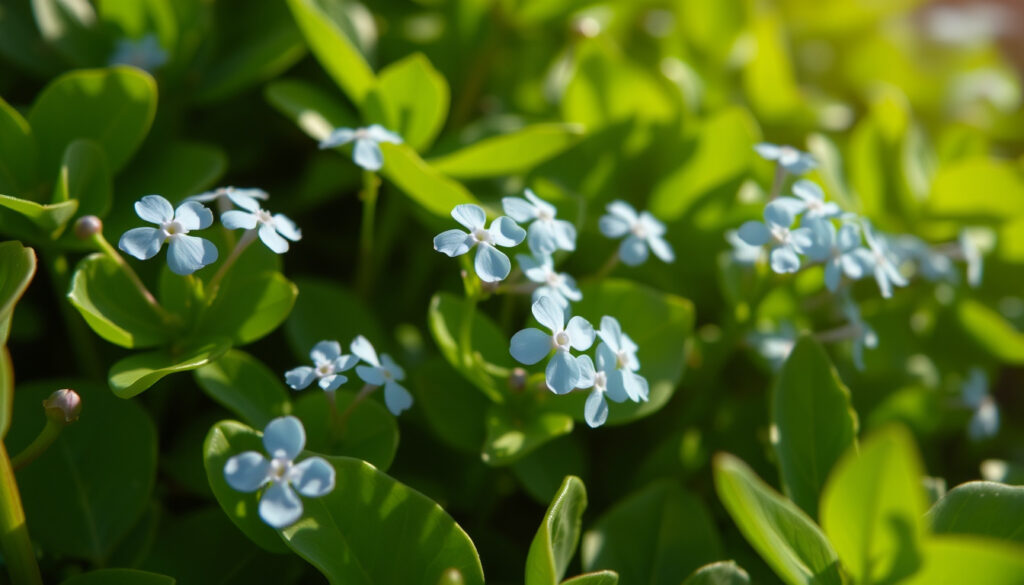
Forget Me Not Flower: Meaning, Symbolism & Growing Guide
James Oliver Mercer Reed • 2026-05-14 • Reviewed by Sofia Lindberg
We all know someone who keeps a tiny blue flower pressed in a book from a trip years ago. The forget-me-not has been the blossom of memory for centuries, but this delicate bloom is also one of the most resilient self-seeding perennials you can grow in cool damp spots across Ireland and the UK.
Botanical name: Myosotis · Common names: Forget-me-not, scorpion grass · Bloom season: Spring (April to June in the Northern Hemisphere) · USDA hardiness zones: 3 to 8 · Official state flower of Alaska
Spring (April to June in northern temperate zones)
Pollinators
Bees, butterflies
The pattern: these tiny blooms punch well above their size, supporting ecosystems and carrying centuries of human memory.
Why is it called forget-me-not?
The name originates from a German folk tale set along the Danube River. A knight picked blue flowers for his lady, then fell into the river and shouted “Vergiss mein nicht” as he drowned (Farmers’ Almanac (trusted gardening publication)).
The implication: a medieval emblem of memory created the idea that these blue petals hold a promise never to be forgotten.
What this means: The name carries a 600-year-old promise, rooted in a tragic love story that still resonates today.
What does a forget-me-not flower symbolize?
Forget-me-nots symbolize true love, fidelity, and remembrance, conveying the message “Do not forget me.” The Alzheimer’s Society uses forget-me-nots for memory loss awareness (Fairfax Gardening PDF (botanical reference)). Freemasons have adopted the flower as an emblem after WWII (Thursd (floral culture magazine)).
“Forget-me-not is a humble but glorious flower which appears in frothy blue clouds at the front of borders.”
GardenersWorld editorial team (RHS-affiliated publication)
The flower’s power as a proxy for memory is so strong it became the lifelong emblem for millions through Alzheimer’s awareness ribbons.
The catch: the very symbol of remembrance reminds us that memory, like the flower, is fragile yet persistent.
Do forget-me-nots come back every year?
Most forget-me-nots (Myosotis sylvatica) are biennials that reseed reliably, appearing as perennials in gardens (Farmers’ Almanac (trusted gardening publication)). Some species like Myosotis scorpioides (water forget-me-not) are true perennials, according to RHS data.
In mild climates, they bloom from spring into early summer.
The strategy: For a patch that self-seeds freely, you don’t need new plants each year. Just let the flowers drop their seeds and manage density by cutting back after bloom.
Yes — let them drop seeds after blooming and they will return reliably.
The pattern: plant once, enjoy for years, but cut down after bloom to control spread.
Where is the best place to plant forget-me-nots?
They thrive in moist, well-drained soil with partial shade. Ideal for woodland gardens, under taller perennials, or in borders. In pots, use quality potting mix and water regularly (GardenersWorld (UK gardening magazine)).
The risk: Hot, dry sites are their downfall — they need cool and moist conditions or they die quickly.
Several species are native to Ireland. Myosotis arvensis (field forget-me-not) and Myosotis sylvatica (wood forget-me-not) are common wildflowers in hedgerows and meadows. They bloom from March to June (Wildflowers of Ireland (botanical database)). The Irish name is Lus an dhearmadta (plant of forgetting).
“Field forget-me-not has slightly cup-shaped pale blue flowers with a yellow centre, from 3 mm in cymes, from April onward.”
The confusion about month signals that traditions overlap — either interpretation works.
What flower is called the poor man’s rose?
Lisianthus (Eustoma grandiflorum) is commonly called the poor man’s rose because its ruffled petals resemble a rose at a lower cost (Cut flower expert). It is not related to forget-me-not but is often used in bouquets.
“Myosotis species or scorpion grasses in the Northern Hemisphere.”
Wikipedia (encyclopedic entry)
Key insights
Confirmed facts
The botanical name Myosotis means “mouse ear” in Greek
Forget-me-nots self-seed reliably and return yearly in suitable climates
They prefer partial shade and moist soil
They are native to Ireland
What’s unclear
The exact year of the medieval folk tale is uncertain
Whether Princess Diana’s favorite flower was forget-me-not is unconfirmed by official biographers
The birth month designation varies across traditions
The gaps hint at the flower’s power: folklore and memory are always partly myth.
For the beginner gardener
For the Irish gardener with a cool, damp patch: sow seeds in spring or autumn. If you start a patch now, you’ll never need to ask “where did they go?” — they will return.
What you get: Plant once, cut back after bloom, and enjoy self-renewing blue clouds every spring without extra work.
How long do forget-me-nots bloom?
From April to June in warm regions.
Can forget-me-nots grow in full sun?
Sun works if kept moist; partial shade is better.
Are forget-me-nots invasive?
They self-seed freely but are easy to control by deadheading.