Herring Under Fur Coat Near Me – Where to Find Shuba Salad Locally
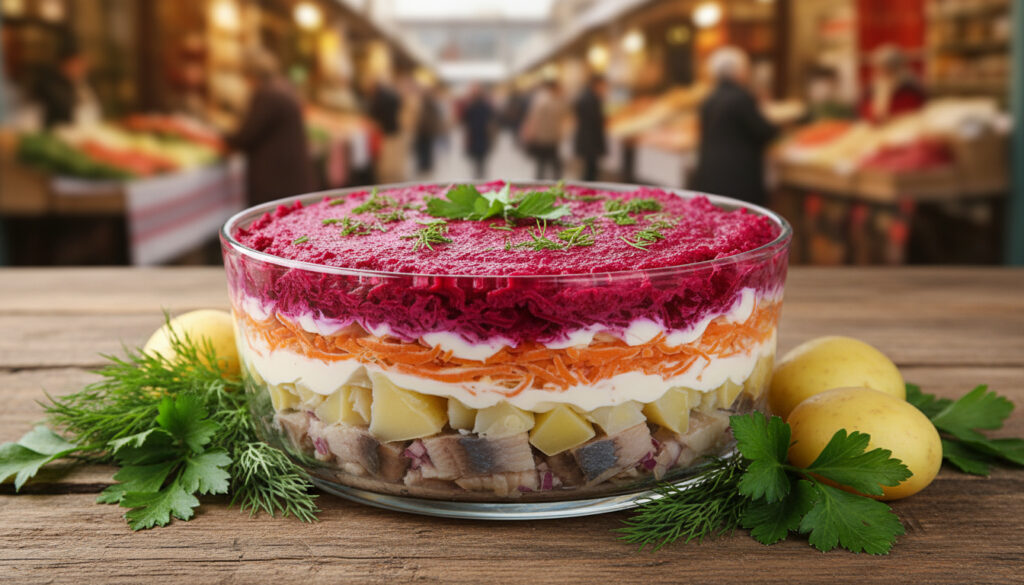
Herring under a fur coat, known in Russian as shuba or sel’dka pod shuboy, stands as one of the most recognizable layered salads from Eastern European cuisine. This festive dish piles salted herring beneath grated boiled vegetables—potatoes, carrots, beets, onions—and eggs, all bound together with mayonnaise. TasteAtlas identifies the preparation as originating from Russian and Eastern European culinary traditions, where its distinctive purple-red top layer resembles a heavy winter coat, giving the salad its memorable name while signaling its presence on Soviet-era holiday tables.
For those searching locally, the query herring under fur coat near me often leads to Russian delis, Eastern European markets, and specialty grocers in cities with significant post-Soviet diaspora communities. While the dish remains a New Year’s Eve staple in Russia, Ukraine, and Belarus, its availability in the United States depends heavily on regional demographic patterns, with fresh preparation typically found in immigrant-run establishments rather than mainstream supermarket chains.
The salad carries deep cultural resonance, serving historically as a symbol of abundance during Soviet shortages and national unity through its ingredient symbolism—herring representing the proletariat, potatoes the peasantry, and red beets the Bolshevik revolution. Today, it evokes nostalgia for some and culinary curiosity for others, remaining a polarizing but ubiquitous presence at celebrations despite modern dietary trends.
What Is Herring Under a Fur Coat?
Origin
Soviet-era Russian layered salad (Shuba)
Key Ingredients
Herring, potatoes, carrots, beets, onions, mayo
Best For
New Year’s Eve, potlucks, Eastern European cuisine
Find Near You
Russian delis, Eastern European markets, delivery apps
Essential Characteristics
- High-calorie festive dish: Approximately 350-500 calories per serving, making it a hearty option for cold weather celebrations.
- Layered construction: Built from bottom to top with herring, onions, potatoes, carrots, beets, and hard-boiled eggs, separated by mayonnaise.
- Visual signature: The grated beet layer creates a distinctive purple “fur coat” appearance that covers the fish beneath.
- Popular in diaspora communities: Concentrated availability in areas with Russian, Ukrainian, and Belarusian immigrant populations.
- Search spikes seasonally: Demand peaks during December and January holidays, particularly around New Year’s Eve.
- Vegetarian adaptations exist: Modern variations substitute mushrooms, tofu, or beans for herring while maintaining the vegetable layers.
- Polarizing flavor profile: The combination of pickled fish, earthy beets, and rich mayonnaise creates strong reactions—loved by some, avoided by others.
| Fact | Detail |
|---|---|
| Dish Name | Herring under a Fur Coat (Shuba) |
| Cuisine | Russian/Soviet |
| Prep Time | 30-45 minutes |
| Serves | 6-8 people |
| Calories | 350-500 per serving |
| Primary Protein | Salted herring |
| Binding Agent | Mayonnaise |
| Signature Color | Purple-red (from beets) |
Where Can You Find Shuba Salad Near You?
Locating authentic herring under a fur coat requires targeting specific venues that cater to Eastern European communities. Unlike generic salad bars, this dish demands preparation by kitchens familiar with curing herring and assembling the precise layer structure that defines the tradition.
Russian and Eastern European Delis
Independent delis and grocery stores run by Russian, Ukrainian, or Belarusian proprietors represent the most reliable sources for fresh, house-made shuba. These establishments typically prepare the salad in-house during holiday seasons, selling it by weight from refrigerated cases. Cities with significant post-Soviet populations—such as Brighton Beach in Brooklyn, the Fairfax District in Los Angeles, and parts of Chicago and Seattle—host multiple venues offering daily preparation. Doma Kitchen in the Seattle area features the dish prominently, citing the historical Bogomilov legend while serving a hearty version with beets and eggs.
Delivery App Availability
Major delivery platforms stock shuba in metropolitan areas with sufficient demand. Searching within apps like Uber Eats, DoorDash, or Grubhub for “Russian deli” or “shuba salad” may yield results in cities including New York, Miami, San Francisco, and Boston. However, availability fluctuates seasonally, with broader selection appearing in December and January.
When searching herring under fur coat near me, prioritize establishments advertising “sel’dka pod shuboy” or “shuba” specifically. Generic “Russian salad” listings often refer to Olivier salad instead, a different mayonnaise-based dish with peas and ham.
Grocery Store Prepared Foods
Some international markets and Russian grocery chains stock pre-packaged shuba in their prepared foods sections, particularly in regions with high Eastern European immigration. These versions offer convenience but may vary in freshness and authenticity compared to deli-counter preparations made the same day.
What Is the History Behind This Iconic Dish?
Multiple competing narratives cloud the exact origins of herring under a fur coat, with no single definitive creation story confirmed by historical records. The dish likely emerged from converging influences rather than a single moment of invention.
The Tavern Keeper’s Solution
Culinary historians document a popular tale crediting Moscow merchant Anastas Bogomilov—or possibly his chef Aristarkh Prokoptsev—with inventing the salad in 1918 or 1919. According to these accounts, Bogomilov sought to curb drunken brawls in his taverns by serving a fatty, filling salad that slowed alcohol absorption. The theory suggests that by reducing intoxication rates, the merchant minimized property damage and violence among patrons during the chaotic post-revolutionary period.
The name shuba literally translates to “fur coat,” describing how the grated vegetable layers envelop the herring beneath. Some linguists suggest the term may also acronymize a Soviet slogan against chauvinism: “Shovinizm i Upadok—Boykot i Anathema!“
Northern European Precedents
Historical records indicate that herring salads predate the Soviet era across Northern Europe, with similar preparations documented in 19th-century Germany and Scandinavia. Swedish recipes dating to 1864 utilized affordable herring paired with garden vegetables, traditions that likely migrated into Russian culinary practice by the late 1800s, providing foundational techniques for what would become shuba.
While the Bogomilov legend persists in popular culture, no contemporary documentation from 1918-1919 definitively confirms this creation story. The true origin likely involves gradual evolution rather than a single inventor.
How Is Traditional Herring Under a Fur Coat Prepared?
Authentic preparation follows a strict layering protocol that creates both the visual appeal and flavor progression characteristic of the dish. While home cooks and restaurants may adjust proportions, the fundamental architecture remains consistent across variations.
Core Ingredients and Structure
Wikipedia’s culinary documentation describes the standard assembly proceeding from bottom to top: diced herring and onions form the base, followed by grated potatoes, carrots, and beets, with mayonnaise spread between layers to bind the components. The final beet layer provides the signature purple coating. Variations include the addition of grated apples for sweetness or chopped pickles for acidity.
Preparation Technique
Cooks boil the vegetables and eggs until fully cooked, then cool and grate them separately to maintain distinct layers. The herring requires soaking to reduce saltiness before dicing. Assembly occurs in a clear glass dish or 8×12 inch rectangular container to showcase the stratified construction. The completed salad requires several hours of chilling to allow flavors to meld, developing the characteristic tangy-sweet profile that defines the dish.
How Did Herring Under a Fur Coat Evolve Through the Decades?
-
“Coronation Gatchina Trout Under a Fur Coat” served at Alexander III’s dinner; later adapted using herring instead of trout. Russian Kitchen Archives
-
Bogomilov legend places the invention in Moscow taverns as a practical measure to reduce alcohol-related violence. Atlas Obscura
-
Dish peaks as Soviet centerpiece for New Year’s and Christmas celebrations, spreading across Soviet republics and becoming mandatory holiday fare. Culinary History Documentation
-
Post-Soviet emigration spreads the recipe globally, establishing shuba as a diaspora comfort food in North America and Europe.
-
Remains a festive staple in Russia, Ukraine, and Belarus while gaining availability via delivery apps in major international cities.
Separating Fact from Fiction in Shuba’s Origins
Established Information
- The dish consists of layered salted herring, boiled vegetables, and mayonnaise.
- It became a Soviet New Year’s staple during the 1960s and 1970s.
- The name “shuba” means “fur coat” in Russian, describing the vegetable covering.
- 19th-century antecedents exist in German and Scandinavian cuisine.
Remaining Uncertainties
- No documentary evidence confirms Anastas Bogomilov invented the dish in 1918-1919.
- The exact date when herring replaced trout in the 1883 recipe remains unclear.
- The theory that “shuba” acronymizes an anti-chauvinism slogan lacks definitive proof.
- Specific “near me” availability changes frequently by city and season.
Why Does Herring Under a Fur Coat Symbolize Soviet Celebration?
During the Soviet era, the salad transcended mere nutrition to become a symbol of abundance amid scarcity. Holiday tables often featured this dish as the primary “luxury” item, representing national unity through its ingredient symbolism: herring for the working class, potatoes for the agricultural peasantry, and red beets for the Bolshevik revolution. Iowa Hawkeyes Women’s Basketball Schedule – 2024-25 Full Results and Tickets provides an interesting parallel of how cultural institutions maintain tradition through specific seasonal events, much like shuba’s enduring presence at New Year’s gatherings.
The dish evokes powerful nostalgia within post-Soviet communities, connecting celebrants to childhood memories and familial traditions. Its polarizing nature—some revel in the combination of pickled fish and earthy beets while others reject the mayonnaise-heavy texture—has not diminished its ubiquity. It remains non-negotiable at Russian New Year’s celebrations, appearing alongside other traditional foods as a cultural touchstone that persists despite decades of culinary globalization.
Expert Perspectives on Herring Under a Fur Coat
Classic Shuba is a must for Russian holidays. The layering technique creates not just visual appeal but allows the flavors to meld over time, developing the characteristic tangy-sweet profile that defines the dish.
Russian food historians
The salad represents a remarkable adaptation of available ingredients—transforming humble herring into a celebratory centerpiece through the simple application of grated vegetables and mayonnaise.
Culinary preservationists
Where Should You Start Your Search for Herring Under a Fur Coat?
Begin your search by identifying Russian or Eastern European delis within your metropolitan area, particularly in neighborhoods with post-Soviet immigrant communities. Check delivery applications during December and January when preparation increases, or assemble the layers yourself using salted herring from specialty grocers. Cast of I Know What You Did Last Summer 2025 – Full Cast and Characters may not satisfy your culinary curiosity, but understanding where to find authentic shuba will ensure your holiday table honors this resilient Soviet tradition.
Frequently Asked Questions About Shuba Salad
Can herring under a fur coat be made without fish?
Yes, vegetarian versions substitute mushrooms, tofu, or beans for herring while maintaining the vegetable layers.
How long does shuba last in the refrigerator?
Properly stored, the salad remains fresh for 2-3 days when refrigerated, though flavors peak within 24 hours of preparation.
Is this dish served year-round?
While available year-round at Russian delis, consumption spikes dramatically during New Year’s celebrations, reflecting its cultural association with winter holidays.
What makes the salad purple?
Grated red beets form the top layer, creating the distinctive purple “fur coat” appearance that gives the dish its name.
Are there regional variations within the United States?
Some American adaptations add apples or pickles for sweetness and acidity, while West Coast versions occasionally incorporate local sustainable fish alternatives to traditional Atlantic herring.
Why is it associated with reducing drunkenness?
The Bogomilov legend suggests the fatty salad slowed alcohol absorption, though historical verification of this origin story remains uncertain.
More related posts
 Animal Crossing New Horizons: Money Trees & Myths
 Book of Boba Fett: Watch Order, Reception, and Season 2 Explained
 Quantum Leap Season 3: Status & Where to Watch
 Phoenix Suns vs OKC Thunder Timeline: 2026 Playoffs History
 Oona Chaplin Movies and TV Shows: Complete List and Biography
 Forget Me Not Flower: Meaning, Symbolism & Growing Guide
 St. Louis Things to Do: Free Attractions, Costs & Safety
 June 2025 Social Security Payment Dates & COLA