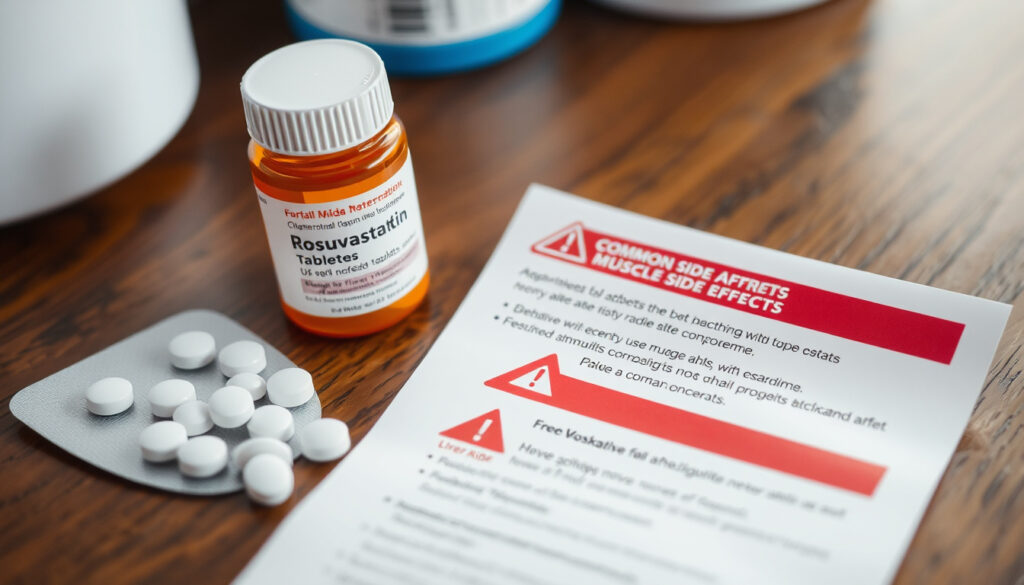
Side effects of rosuvastatin: Common, long-term, what to avoid
If you’ve been prescribed rosuvastatin to lower your cholesterol, you’ve probably wondered about the side effects. Most people tolerate the drug well, but about 1 in 10 experience headache, and a smaller number deal with muscle aches or digestive issues. This article breaks down the common and serious side effects, compares rosuvastatin with atorvastatin, and explains how to manage risks through dose adjustments and lifestyle changes.
Headache prevalence: 1–10% of users (common) ·
Muscle pain prevalence: 1–5% of users (common) ·
Serious liver injury incidence: <1 in 10,000 (rare) ·
Rhabdomyolysis incidence: <1 in 10,000 (very rare) ·
Dose forms available: 5, 10, 20, 40 mg tablets
Quick snapshot
- Headache, nausea, constipation, diarrhea (NHS (UK health authority))
- Mild muscle aches or fatigue (Mayo Clinic (leading medical center))
- Dizziness and difficulty sleeping (Statin Therapy: Review of Safety and Potential Side Effects (PMC))
- Liver damage (jaundice, dark urine) (American Heart Association (AHA scientific statement))
- Rhabdomyolysis (severe muscle pain, dark urine) (Mayo Clinic)
- Allergic reactions (rash, swelling) (Long-term use of rosuvastatin: a critical risk benefit appraisal (PMC))
- Avoid gemfibrozil and high-dose niacin (AHA scientific statement)
- No interaction with grapefruit juice (Cardiovascular Research (peer-reviewed journal))
- Caution with alcohol and other liver-toxic drugs (NHS)
- Rosuvastatin more potent at low doses (Long-term use of rosuvastatin (PMC))
- Both have similar side-effect profiles (Long-term use of rosuvastatin)
- Rosuvastatin has fewer drug-food interactions (Cardiovascular Research)
This table summarizes the key facts about rosuvastatin side effects, covering dose, risks, and monitoring.
| Label | Value |
|---|---|
| Generic Name | Rosuvastatin |
| Brand Names | Crestor |
| Drug Class | Statin (HMG-CoA reductase inhibitor) |
| Common Side Effects | Headache, muscle aches, nausea, constipation (NHS) |
| Serious Risks | Liver damage, rhabdomyolysis, new-onset diabetes (AHA, Harvard Health) |
| Typical Doses | 5, 10, 20, 40 mg taken once daily |
What is the most common side effect of rosuvastatin?
Frequency and impact of headache
Headache is the most frequently reported side effect, affecting an estimated 1–10% of people who take rosuvastatin, according to NHS (UK health authority) guidance. While usually mild and temporary, headaches can be bothersome enough to affect daily life. In clinical trials, headache was one of the most common adverse events leading to discontinuation, though the exact rate varies by dose.
Digestive issues: nausea, constipation, diarrhea
About 1–5% of patients report nausea, constipation, or diarrhea. These symptoms typically appear early in treatment and often resolve on their own. The Statin Therapy review (PMC) notes that gastrointestinal side effects are generally mild and do not require stopping the medication.
Muscle aches and fatigue
Mild muscle pain occurs in up to 5% of patients, as reported by Mayo Clinic (leading medical center). This is distinct from the rare but serious muscle damage called myopathy. Fatigue is also common, especially in the first few weeks. The pattern: lower doses (5–10 mg) are associated with fewer muscle complaints than higher doses (20–40 mg).
Most common side effects are mild and transient. For patients starting rosuvastatin, the first month is the hardest. If symptoms persist, a lower dose or switching to atorvastatin may help.
Patients should expect mild, temporary side effects at the start; those who persist may need a dose adjustment or statin switch.
What are the long-term side effects of rosuvastatin?
Potential for liver enzyme elevation
Long-term use of rosuvastatin can cause a rise in liver enzymes (ALT and AST). According to the American Heart Association scientific statement, dose-dependent asymptomatic transaminase elevations above 3 times the upper limit of normal occur in about 1% of patients. The risk is highest during the first three months, which is why routine liver function tests are recommended. A 2.5-fold increase in abnormal liver tests was observed when rosuvastatin was started at 40 mg daily versus 10 mg daily, according to a long-term risk benefit appraisal (PMC).
Risk of type 2 diabetes with prolonged use
Statins, including rosuvastatin, are associated with a small increased risk of developing type 2 diabetes. Harvard Health Publishing reports that statins increase diabetes risk by 10% to 35%, depending on dose. A 2023 study highlighted by the BMJ Group found that rosuvastatin may carry a higher diabetes risk than atorvastatin. The meta-analytic odds ratio for new-onset diabetes with rosuvastatin 20 mg/day was 1.25, while atorvastatin 80 mg/day had an odds ratio of 1.15, per a Cardiovascular Research review.
Cognitive effects: memory loss and confusion (rare)
Rare reports of memory loss, confusion, and difficulty concentrating have been submitted to the FDA. These effects are usually reversible after stopping the statin. The Statin Therapy review notes that the exact mechanism is unknown and that the incidence is very low.
Patients on long-term rosuvastatin should have annual blood glucose and liver enzyme checks. The diabetes risk is real but small — for most people, the cardiovascular benefit outweighs it.
Long-term users need regular monitoring of liver enzymes and blood glucose; the diabetes risk is modest but warrants attention.
What organ is rosuvastatin hard on?
Liver: signs of hepatotoxicity
Rosuvastatin can affect the liver, especially at higher doses. Signs of liver damage include dark urine, jaundice, upper abdominal pain, nausea, and loss of appetite. The Mayo Clinic advises contacting your doctor immediately if you experience these symptoms. Clinically significant ALT elevations were uncommon in rosuvastatin trials, per the long-term appraisal (PMC).
Muscles: risk of myopathy and rhabdomyolysis
Severe muscle pain or weakness may indicate myopathy or rhabdomyolysis, a rare but serious condition where muscle tissue breaks down and can cause kidney failure. The AHA scientific statement notes that the risk increases with statin dose. Myopathy possibly related to rosuvastatin was reported in 0.03% of patients taking 5–40 mg, according to the long-term appraisal.
Kidneys: impact in pre-existing renal impairment
Rosuvastatin is partially excreted by the kidneys, so dose adjustment is needed in severe kidney disease. The drug has been associated with dose-dependent, reversible proteinuria, but this does not lead to acute or chronic kidney damage in long-term trials, as reported in the critical risk benefit appraisal.
The pattern: organ-specific risks are dose-dependent. Starting at 5 or 10 mg and titrating up under medical supervision greatly reduces the chance of serious liver or muscle injury.
Liver and muscle risks are dose-dependent; starting low and slow is the safest strategy for organ protection.
Which is safer, atorvastatin or rosuvastatin?
Both statins are considered safe and effective, but there are differences in their side-effect profiles and interactions.
Side-effect profile comparison: muscle pain, liver enzymes
In controlled clinical trials, rosuvastatin 5–40 mg had an adverse event profile similar to atorvastatin 10–80 mg, according to the long-term use review (PMC). Muscle pain and liver enzyme elevations occur at similar rates. However, the AHA statement notes that a clear dose-response relationship for myopathy has not been demonstrated with atorvastatin, while for rosuvastatin the risk appears more dose-dependent.
Potency and dose equivalence
Rosuvastatin is more potent at lower doses. A 10 mg dose of rosuvastatin lowers LDL cholesterol roughly as much as 20 mg of atorvastatin. This means rosuvastatin can achieve target cholesterol levels with a smaller dose, which may reduce the risk of certain side effects.
Drug interactions and metabolism differences
Atorvastatin is metabolized by CYP3A4 and interacts with grapefruit juice, while rosuvastatin is not significantly metabolized by that enzyme and does not interact with grapefruit. The Cardiovascular Research review confirms that rosuvastatin has fewer drug-food interactions. However, rosuvastatin may have a slightly higher risk of new-onset diabetes, as mentioned earlier.
This comparison table highlights the key differences between the two statins across safety, efficacy, and drug interaction measures.
| Feature | Rosuvastatin | Atorvastatin |
|---|---|---|
| Potency (LDL lowering per mg) | Higher (40 mg rosuvastatin = ~55% LDL reduction) | Lower (40 mg atorvastatin = ~45% LDL reduction) |
| Typical starting dose | 5–10 mg | 10–20 mg |
| Muscle side effects risk | Dose-dependent; myopathy rate 0.03% | Dose-dependent; no clear dose-response for myopathy |
| Liver enzyme elevation | ~1% (dose-dependent) | ~1% (dose-dependent) |
| Diabetes risk (OR vs placebo) | 1.25 (20 mg/day) | 1.15 (80 mg/day) |
| Drug interactions | Fewer (no grapefruit interaction) | More (CYP3A4, grapefruit) |
The trade-off: rosuvastatin’s higher potency allows lower doses, but its diabetes risk may be slightly higher. Atorvastatin has more drug interactions but a longer track record.
Patients should weigh rosuvastatin’s potency and fewer drug interactions against its slightly higher diabetes risk when choosing between the two statins.
What to avoid when taking rosuvastatin?
Alcohol consumption
Excessive alcohol intake can increase the risk of liver enzyme elevation. The NHS advises limiting alcohol to no more than 14 units per week and avoiding binge drinking.
Other medications that increase muscle damage risk
Avoid combining rosuvastatin with gemfibrozil, a fibrate used for high triglycerides. The AHA statement warns that this combination significantly raises the risk of myopathy and rhabdomyolysis. Use caution with other fibrates and high-dose niacin.
Supplements and herbal products
Red yeast rice contains natural statins and can compound side effects. St. John’s wort may reduce rosuvastatin’s effectiveness. Always consult your doctor before taking any supplement.
Upsides
- Effective at low doses — less drug exposure
- Fewer drug-food interactions than atorvastatin
- Well-tolerated by most patients
- Once-daily dosing
Downsides
- Higher diabetes risk signal compared to atorvastatin
- Dose-dependent proteinuria (rare)
- Liver enzyme monitoring required
- More expensive than generic atorvastatin
Certainty and uncertainty
Confirmed facts
- Headache and digestive issues are common side effects (NHS)
- Severe muscle pain requires immediate medical attention (Mayo Clinic)
- Liver enzyme monitoring is standard on rosuvastatin (Long-term appraisal)
What’s unclear
- Exact long-term cognitive effects remain debated
- Prevalence of side effects in patients over 75 is less studied
- Interaction with specific dietary supplements is not fully catalogued
- Rosuvastatin’s potency advantage in real-world adherence is not fully established
Common side effects include a headache, feeling sick, and digestive problems.
NHS (National Health Service)
If you have pain or tenderness in the upper stomach, pale stools, dark urine, loss of appetite, nausea, vomiting, or yellow eyes/skin, contact your doctor.
Mayo Clinic
Rosuvastatin may cause myopathy/rhabdomyolysis; risk increased with higher doses and in certain populations.
For patients who need intensive LDL lowering, rosuvastatin offers a potent, once-daily option with a manageable side-effect profile when started at 5 or 10 mg. The key to minimizing risks is dose titration, regular monitoring of liver enzymes and blood glucose, and avoiding interacting medications. For patients with existing diabetes risk or those who prefer a statin with fewer drug interactions, rosuvastatin is a strong choice — but atorvastatin remains a safe alternative with a longer safety record. Patients should discuss their individual risk factors with their doctor to determine the best statin.
pmc.ncbi.nlm.nih.gov, droracle.ai, clinicalcorrelations.org, healthrx.com
Frequently asked questions
Can rosuvastatin cause weight gain?
Weight gain is not a reported side effect of rosuvastatin in clinical trials. Some patients may experience mild fluid retention, but significant weight gain is uncommon.
Does rosuvastatin cause hair loss?
Hair loss is not listed as a common side effect. There have been rare reports, but no causal link has been established in large studies.
Can I drink alcohol while taking rosuvastatin?
Moderate alcohol consumption (up to 14 units per week) is generally safe, but heavy drinking increases the risk of liver damage. Discuss your alcohol intake with your doctor.
What time of day should I take rosuvastatin?
Rosuvastatin can be taken at any time of day, with or without food. Taking it at the same time each day helps maintain consistent levels.
Does rosuvastatin interact with grapefruit?
No. Unlike atorvastatin, rosuvastatin is not metabolized by CYP3A4 and does not interact with grapefruit juice.
How long do side effects of rosuvastatin last?
Most common side effects like headache and nausea resolve within a few days to weeks. If they persist, your doctor may adjust the dose or switch medications.
Is it safe to take rosuvastatin during pregnancy?
No. Rosuvastatin is contraindicated during pregnancy because statins can harm fetal development. Women of childbearing age should use effective contraception while on the drug.
More related posts
 Hellboy: The Crooked Man – Flop, Cast & Differences (2024)
 Best Coffee Shops Near Me in Dublin – Open Now & Rated (2025)
 Andrew Mountbatten-Wind or: Inve tigation & Biography 2025
 Whitney Leavitt Dancing With the Stars: Season 34 Recap
 Patrick Bet-David Net Worth 2025: How He Built His Wealth
 Head of Household vs Single – Key Differences and Tax Savings
 Things to Do in LA: Top Attractions, Safety Tips & More
 What Causes Acid Reflux – Key Triggers and Risk Factors